
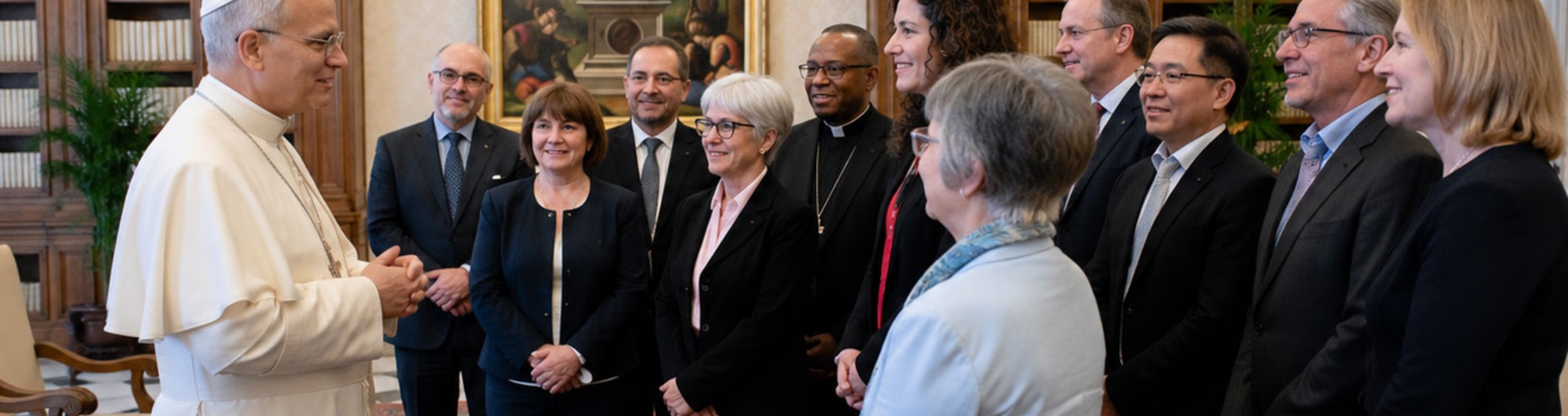
Pope Leo XIV Meets with the Pontifical Commission for the Protection of Minors

Pope Leo XIV Meets with the Pontifical Commission for the Protection of Minors
On Tuesday 16th March 2025, Pope Leo XIV received the Pontifical Commission in a private audience, and in doing so demonstrated his commitment to supporting the Commission in its safeguarding ministry and exhibited a sign of his personal dedication to ensuring the safety of children and people in vulnerable positions.
In his address, Pope Leo XIV offered a firm reminder that safeguarding is not a technical exercise but a profoundly human one and he invited the Church to recognise safeguarding as an expression of care for those whose lives have been marked by fragility and harm. At the heart of his remarks was a simple conviction: that the protection of children and people in situations of vulnerability must arise naturally from the Church’s moral imagination. Safeguarding, he suggested, ought not to be viewed as an obligation imposed by policy, but as the fruit of a faith attentive to suffering, attuned to human dignity, and willing to be shaped by the voices of those most deeply affected. The experiences of victims and survivors of abuse as well as their families, he noted, speak uncomfortable truths, yet they also illuminate a path towards healing—one which the Church cannot ignore.
Pope Leo XIV acknowledged the Commission’s work, recognising that much of it takes place away from public view and often in demanding circumstances. At the same time he emphasised to the Commission that procedures alone are insufficient. What truly matters is the formation of a culture of care: a way of being that listens with patience, responds with integrity, and fosters communities where every person—especially the vulnerable—may live without fear.
A significant feature of this year’s reflection concerned the shifting nature of vulnerability to abuse and safeguarding in the digital age. Children and young people increasingly inhabit online spaces, and the Pope urged the Church to be alert to the subtle risks emerging there. Digital environments can conceal manipulation, exploitation, and isolation; safeguarding today therefore requires not only pastoral sensitivity but also a literate understanding of how online life shapes behaviour and exposes individuals to new forms of harm. This awareness, he argued, must inform both policy and pastoral practice if the Church is to protect effectively those at risk.
Pope Leo XIV also encouraged collaboration across the Church, both within the Holy See and in local communities around the world. Strengthening cooperation, he suggested, helps ensure that preventive efforts, disciplinary processes, and pastoral support are not isolated tasks but integrated expressions of the same commitment to human dignity. Pope Leo reminded us that safeguarding touches every corner of ecclesial life— formation, governance, pastoral care, and everyday encounters.
Throughout his address, Pope Leo XIV returned repeatedly to one essential truth: safeguarding begins with conversion of heart. It requires the willingness to let the suffering of others disturb complacency, the humility to learn from past failures, and the resolve to build communities—both physical and digital—where kindness, attentiveness, and safety are woven into the fabric of daily life. In this sense, safeguarding is nothing less than a work of hope: the hopeful conviction that the Church can and must be a place where trust is honoured, wounds are taken seriously, and every person, especially the vulnerable, is treated with the dignity they deserve.